
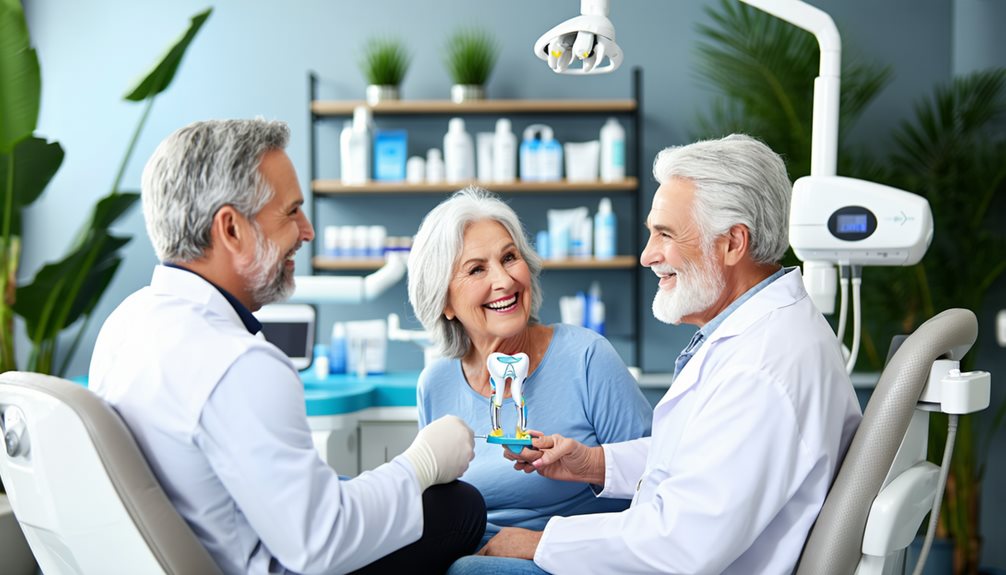
Affordable senior dental care can be effectively managed through various avenues prioritizing preventive strategies and patient needs. Community dental clinics provide essential services tailored to seniors’ unique oral health requirements. Dental school services, offering reduced-cost care, blend training with supervisory oversight. Senior discount programs and government assistance, such as Medicaid and Medicare, widen access to necessary care. Nonprofit dental organizations also play a significant role in offering cost-effective solutions. Membership savings plans foster affordability, ensuring thorough care while supporting long-term oral hygiene. To explore these options further, more detailed insights are available to guide your journey toward ideal senior dental health.
Community Dental Clinics
While traversing the complexities of senior dental care, community dental clinics emerge as essential resources for affordable and accessible services. These clinics play a pivotal role in addressing the unique oral health needs of seniors, offering a preventive approach that is both patient-focused and grounded in clinical expertise.
By prioritizing community outreach, these clinics guarantee that seniors are not only informed about available services but also educated on the importance of maintaining oral health as they age.
Community dental clinics often serve as a beacon of innovation in dental care, employing cutting-edge techniques and technologies to deliver high-quality treatment while keeping costs manageable for seniors. Their commitment to patient education is a cornerstone of their success, empowering seniors to take charge of their oral health through informed decision-making.
Educational programs tailored to the senior demographic, focusing on preventive measures and recognizing early signs of dental issues, are integral to these clinics’ offerings.
Furthermore, community dental clinics foster a collaborative environment that encourages dialogue between dental professionals and patients. This patient-centered approach not only enhances the quality of care but also guarantees that seniors receive personalized treatment plans that cater to their specific oral health needs.
Dental School Services
Dental school services present a unique and valuable opportunity for seniors seeking affordable dental care, often providing extensive services at a fraction of the cost. These institutions are designed to integrate dental student training with patient care, guaranteeing that seniors receive high-quality treatments under the supervision of experienced faculty members.
This innovative approach not only promotes a thorough understanding of oral health for students but also empowers seniors to achieve peak dental wellness without the financial burden.
In dental schools, patient care is prioritized through a preventive approach, emphasizing early detection and management of dental issues. Seniors can access a wide range of services, from routine cleanings and exams to advanced procedures such as crowns and dentures.
The collaborative environment fosters an atmosphere where seniors are treated with respect, compassion, and cutting-edge techniques.
For seniors desiring an innovative solution to dental care, the dynamic setting of a dental school provides a forward-thinking alternative. The integration of the latest research and technology into dental student training guarantees that patients benefit from the most current practices in oral health management.
Senior Discount Programs
Building on the opportunities provided by dental school services, senior discount programs offer another strategic avenue for older adults to access cost-effective dental care. These programs are designed with a patient-focused approach, ensuring that the needs of seniors are met with precision and care. By identifying discount eligibility, seniors can gain access to a range of program benefits tailored to enhance their oral health while minimizing financial burdens.
Innovation in senior dental care emphasizes preventive measures that are both cost-effective and all-encompassing. Discount programs often include reduced rates on essential services such as cleanings, exams, and even more advanced procedures like crowns or dentures. This strategic approach not only addresses immediate dental needs but also proactively prevents future complications, aligning with a broader preventive care philosophy.
Eligibility criteria for these programs typically consider age and financial status, ensuring that those who need assistance most can participate. It is essential for seniors to verify their discount eligibility with their dental care providers, as participating practices may offer varying levels of discounts and services.
Government Assistance Options
When considering affordable dental care for seniors, it is essential to explore government assistance options such as Medicaid and Medicare, which provide varying levels of dental coverage depending on eligibility and state regulations.
Additionally, many states offer specific dental programs aimed at enhancing access to necessary oral health services for older adults.
Understanding these resources can empower seniors to prioritize preventive care while managing costs effectively.
Medicaid and Medicare Coverage
Steering through the complexities of government assistance options, such as Medicaid and Medicare, is fundamental for seniors seeking affordable dental care. Understanding Medicaid eligibility is critical, as it serves as an essential safety net for low-income seniors.
Medicaid coverage varies by state, but it typically includes necessary dental services. Seniors should assess their financial status and residency requirements to determine their eligibility. This proactive step can lead to significant savings on dental care expenses, safeguarding both oral health and overall well-being.
Medicare, primarily known for its health insurance benefits, offers limited dental coverage. While traditional Medicare does not cover routine dental procedures, innovations in Medicare Advantage plans have expanded benefits, often encompassing preventive dental care.
These plans may include regular check-ups, cleanings, and even some restorative services. Seniors are encouraged to explore these options, comparing them carefully to align with their specific dental needs.
For individuals focused on maintaining oral health, a preventive approach is essential. By leveraging Medicaid and Medicare benefits effectively, seniors can access necessary dental care while minimizing out-of-pocket costs.
Ultimately, informed decision-making guarantees that financial constraints do not hinder the pursuit of ideal oral health, empowering seniors to embrace innovation in their dental care journey.
State-Specific Dental Programs
Maneuvering the landscape of state-specific dental programs requires both attention to detail and an understanding of nuanced eligibility criteria. These programs vary markedly across regions, offering a complex matrix of state resources that cater specifically to seniors.
State-specific programs are tailored to meet unique community needs, driven by local policies and funding. Consequently, seniors must be proactive in exploring available options tailored to their geographic area.
Key considerations include:
- Income thresholds: Many programs base eligibility on income levels, requiring documentation to verify financial need.
- Service availability: The scope of services offered may differ, with some states providing extensive care while others focus on preventive measures.
- Enrollment periods: Timely application is critical, as enrollment windows can vary, impacting access to care.
For seniors, leveraging state resources effectively can mean the difference between proactive dental maintenance and unmet oral health needs. By focusing on state-specific opportunities, seniors can navigate a path toward extensive, preventive care, ensuring that their dental health remains a priority throughout their golden years.
Nonprofit Dental Organizations
Nonprofit dental organizations play an important role in providing senior patients with essential oral health services by focusing on preventive care and promoting overall dental wellness.
These organizations often offer a range of services, including routine cleanings, fillings, and oral health education, with eligibility criteria designed to assist underserved communities.
Available Services Overview
Access to quality dental care is a cornerstone of overall health, particularly for seniors who often face unique oral health challenges. Nonprofit dental organizations are pivotal in offering innovative services that guarantee seniors maintain peak oral hygiene and preventive care.
These organizations are dedicated to providing extensive dental services tailored to meet the needs of the elderly population, focusing on preventive strategies to avert more significant oral health issues.
Available services typically include:
-
Routine preventive care such as cleanings and oral examinations, which are essential for maintaining oral health and detecting potential issues early.
-
Educational programs that focus on the importance of oral hygiene practices, equipping seniors with the knowledge to manage their dental health effectively.
-
Specialized treatments designed to address common age-related dental issues, offering solutions that are both effective and financially accessible.
Eligibility and Enrollment
To guarantee that seniors receive the dental care they need, understanding the eligibility and enrollment criteria for nonprofit dental organizations is essential. As these organizations endeavor to bridge the gap in healthcare access, they often adopt unique eligibility criteria tailored to serve the most vulnerable populations effectively.
Typically, eligibility is determined by factors such as age, income level, and residency status. Some programs prioritize seniors who lack dental insurance or have limited access to traditional dental care services. By identifying and meeting these criteria, seniors can gain access to a range of preventive and restorative dental services.
The enrollment process for nonprofit dental care programs is designed to be straightforward yet thorough, ensuring that deserving seniors can benefit from these services. This process often involves completing an application form, providing documentation to verify eligibility, and sometimes participating in an initial dental health assessment.
Embracing a patient-focused approach, many organizations offer assistance throughout the enrollment process, guiding seniors step-by-step. In pursuit of innovation, some nonprofits have also integrated digital platforms to streamline applications and improve accessibility.
Cost-Effective Solutions
In the domain of dental healthcare, nonprofit organizations present cost-effective solutions that are essential for seniors who require affordable dental services. These organizations are pivotal in promoting preventive care and maintaining ideal oral hygiene, thereby minimizing the onset of dental issues that can be costly and detrimental to overall health.
By offering accessible dental services, nonprofits directly address the financial barriers that many seniors face, ensuring dental care is within reach for those on fixed incomes.
Nonprofit dental organizations provide a variety of services that are tailored to meet the unique needs of seniors. These services often include:
- Preventive Care Programs: Focused on early detection and intervention, reducing the likelihood of severe dental conditions.
- Oral Hygiene Workshops: Educating seniors on effective daily maintenance to prevent common dental problems.
- Sliding Scale Fees: Ensuring affordability by adjusting costs based on the individual’s financial situation.
Membership Savings Plans
With the rising costs of dental care, membership savings plans offer a practical solution for seniors seeking affordable options to maintain their oral health. These plans provide a structured approach to reducing expenses while guaranteeing access to necessary dental services.
By focusing on membership benefits, seniors can take advantage of discounts on preventive, restorative, and cosmetic dental procedures, aligning their care with affordability strategies that meet their financial needs.
Membership savings plans are designed to prioritize preventive care, a critical component in maintaining oral health and avoiding costly treatments in the future. By promoting regular check-ups and cleanings, these plans encourage seniors to adopt a proactive approach to dental health, thereby reducing the risk of complex dental issues.
For seniors desiring innovative solutions, these plans offer flexibility and ease of use, often without the constraints of traditional insurance.
This adaptability guarantees that seniors can tailor their dental care to suit their specific needs and budgetary constraints. By leveraging membership savings plans, seniors not only benefit from cost-effective dental care but also gain peace of mind, knowing they have access to high-quality services that support their long-term oral health goals.
Frequently Asked Questions
How Can I Maintain Dental Health at Home?
To maintain dental health at home, emphasize oral hygiene through brushing, flossing, and using mouthwash. Implement preventive measures such as regular dental check-ups and a balanced diet, ensuring innovative practices for ideal oral care and overall wellness.
What Should I Look for in an Affordable Dental Insurance Plan?
When selecting an affordable dental insurance plan, prioritize coverage options that support preventive care and innovative treatments. Evaluate premium costs against potential out-of-pocket expenses to guarantee extensive patient-focused benefits, aligning with long-term dental health goals.
Are There Any Specific Dental Care Tips for Seniors With Dentures?
For seniors with dentures, maintaining ideal oral health involves innovative denture care and consistent cleaning routines. Regularly clean dentures with a soft brush and mild cleanser, and guarantee proper fit to prevent oral irritation and enhance comfort.
How Often Should Seniors Visit the Dentist for Check-Ups?
Seniors should ideally visit the dentist biannually for check-ups. This preventive care approach helps detect issues early, reducing dental anxiety. Regular visits foster innovation in treatment plans, ensuring peak oral health and enhancing overall quality of life.
Do Certain Diets Impact Oral Health in Seniors?
Certain diets greatly impact seniors’ oral health by affecting nutrient absorption and sugar intake. A preventive approach emphasizing balanced nutrition can enhance oral care, fostering innovative strategies for maintaining ideal dental health in older adults.
Conclusion
Affordable senior dental care can be effectively accessed through various avenues that prioritize clinical expertise and a patient-focused, preventive approach. Community dental clinics and dental school services offer quality care at reduced costs. Senior discount programs and government assistance options provide financial relief, while nonprofit dental organizations extend support to underserved populations. Membership savings plans offer long-term benefits for routine care. Exploring these options guarantees that seniors maintain ideal oral health without incurring prohibitive expenses.

