
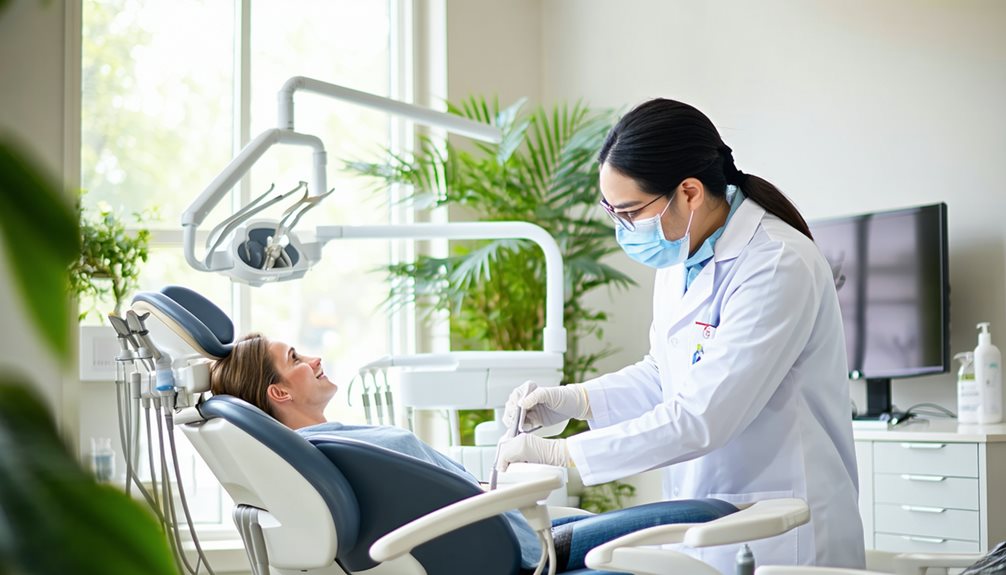
Affordable emergency dental care solutions are effectively provided through community health clinics and nonprofit organizations, which extend services via mobile clinics and dental fairs. Dental schools offer reduced-cost high-quality care under expert supervision, while sliding scale dentists adjust fees based on financial ability. Discount dental plans provide immediate savings without waiting periods, catering to those needing urgent care. Government assistance programs like Medicaid and CHIP offer coverage for low-income individuals, enhancing access to necessary dental services. These diverse approaches integrate patient education and preventive care, ensuring sustainable oral health improvements for those seeking further knowledge on available options.
Community Health Clinics
Community health clinics play an essential role in providing affordable emergency dental care to underserved populations. These clinics are strategically positioned to bridge the gap between high-cost dental services and the urgent needs of low-income communities.
By integrating community outreach initiatives, these clinics effectively extend their services beyond traditional settings, ensuring that critical dental care reaches those who might otherwise forgo treatment due to financial constraints.
One innovative approach involves leveraging mobile clinics as a part of community outreach to deliver on-site emergency care in remote or urban underserved areas. This model not only enhances accessibility but also fosters a proactive approach in managing dental emergencies before they escalate into more severe conditions.
Moreover, community health clinics prioritize patient education as a core component of their service delivery model. Educating patients on oral hygiene practices and preventive measures empowers individuals to take charge of their dental health, thereby reducing the frequency of emergency visits.
By disseminating evidence-based information tailored to diverse populations, these clinics contribute to long-term improvements in oral health outcomes.
Through these strategic initiatives, community health clinics exemplify a forward-thinking approach, offering cost-effective and accessible emergency dental care solutions that resonate with a commitment to innovation and community well-being.
Dental Schools
Beyond the innovative efforts of health clinics, dental schools represent another essential resource in the provision of affordable emergency dental care. These institutions offer a unique blend of academic rigor and practical application through their student clinics, which serve as training grounds for future dental professionals.
Dental education prioritizes not only the theoretical foundation but also the clinical skills necessary to address urgent dental needs effectively.
Student clinics within dental schools provide an invaluable opportunity for patients to receive high-quality care at a reduced cost. Supervised by experienced faculty, dental students gain hands-on experience while adhering to strict clinical guidelines, ensuring patient safety and treatment efficacy.
This model not only bridges the gap between theoretical knowledge and real-world application but also enhances the accessibility of dental services for underserved populations.
Moreover, dental schools often lead in innovative practices and cutting-edge technologies, fostering an environment where evidence-based care is paramount. Patients benefit from treatments that incorporate the latest advancements in dental research and technology.
As dental education evolves, these institutions continue to refine their approach to emergency care, making them pivotal in expanding the reach of affordable dental services and addressing the critical need for accessible, quality oral healthcare.
Sliding Scale Dentists
Sliding scale dentists offer a cost-effective solution for patients requiring emergency dental care, adjusting fees based on income and ability to pay.
Eligibility for these programs typically depends on financial need, with specific documentation required to verify income status.
To locate local providers offering sliding scale services, individuals can consult community health centers, online directories, or contact dental associations for recommendations.
Cost-Effective Treatment Options
How can individuals facing financial constraints access necessary dental care without compromising quality? Sliding scale dentists offer a compelling solution by providing cost-effective treatment options tailored to an individual’s financial capacity.
These practitioners adjust their fees based on the patient’s income, ensuring that essential services remain accessible. This model promotes a broad spectrum of dental care from preventive care, such as cleanings and exams, to urgent treatments like extractions or root canals, thereby addressing a range of dental needs without imposing unsustainable financial burdens.
Evidence suggests that sliding scale dentistry not only enhances accessibility but also contributes to improved oral health outcomes. By prioritizing preventive care, these practices can mitigate the progression of dental diseases, reducing the necessity for more invasive and costly urgent treatments.
This is particularly vital in emergency dental scenarios where delayed care can exacerbate health issues and lead to increased expenses.
For those seeking innovative, cost-effective dental care, sliding scale dentists represent a paradigm shift. They embody a patient-centered approach that aligns financial accessibility with high-quality care.
Such models not only alleviate immediate financial stress but also foster long-term oral health, enhancing overall well-being and quality of life.
Eligibility and Requirements
To access the benefits of sliding scale dental services, individuals must typically meet specific eligibility criteria set by the dental practice. These criteria are designed to guarantee that the services reach those who are most in need of affordable dental care. Generally, eligibility is determined based on income level, family size, and sometimes specific community needs.
Documentation such as pay stubs, tax returns, or proof of government assistance may be required to verify an applicant’s financial status. The precise eligibility criteria can vary considerably between practices, reflecting the diverse ways dental providers endeavor to address local socioeconomic conditions.
The application process for sliding scale services is tailored to streamline accessibility while maintaining rigorous standards of verification. Prospective patients are usually required to complete an application form that details their financial situation.
This process is often designed to be as user-friendly as possible, incorporating both digital and traditional methods to accommodate varying levels of technological access. Providers may also offer guidance throughout the application process to minimize barriers for applicants.
Finding Local Providers
Locating sliding scale dental providers necessitates a systematic approach, as these services are often embedded within community health clinics, non-profit organizations, and educational institutions. The initial step involves a thorough local search utilizing digital platforms that aggregate health services by geographic area.
Websites such as the Health Resources and Services Administration (HRSA) provide directories of community health centers offering dental services on a sliding scale. In addition, state and local health departments often maintain databases of available providers, streamlining the process for individuals seeking affordable care.
The effectiveness of a local search is augmented by meticulously reviewing provider reviews, which offer insights into the quality and reliability of care. Online forums and social media groups dedicated to community health can also be invaluable resources for firsthand accounts and recommendations.
Engaging with these reviews assists in identifying practitioners who not only meet financial criteria but also uphold high standards of dental care.
Innovative approaches such as tele-dentistry consultations can facilitate initial assessments, thereby narrowing down provider options before an in-person visit. This integration of technology into the search process exemplifies a modern approach to accessing emergency dental care, ensuring that solutions are both cost-effective and of superior quality.
Discount Dental Plans
Discount dental plans offer a cost-effective membership option for individuals seeking affordable emergency dental care.
These plans typically provide coverage for a range of emergency services and are supported by extensive nationwide provider networks, ensuring accessibility and convenience for members.
Evidence suggests that such plans can considerably reduce out-of-pocket expenses, making them a viable alternative to traditional dental insurance.
Cost-Effective Membership Options
Maneuvering the domain of cost-effective membership options, particularly discount dental plans, can provide significant financial relief for individuals seeking affordable emergency dental care. These plans offer a strategic approach by granting access to a network of participating dentists who agree to charge reduced fees for their services.
The membership benefits are substantial, providing immediate cost savings without the waiting periods often associated with traditional insurance. Budget-friendly options such as these are increasingly appealing to those who prioritize financial prudence alongside their oral health needs.
Discount dental plans facilitate access to necessary dental care by offering fixed discounts on procedures, thereby ensuring predictability in expenses. This model contrasts with traditional insurance by eliminating deductibles and annual limits, granting members freedom from restrictive financial caps.
In an era where innovation in healthcare financing is paramount, discount dental plans exemplify a forward-thinking solution.
As the landscape of dental care evolves, embracing these budget-conscious membership options can empower individuals to proactively manage their oral health, ensuring timely and affordable access to emergency dental services.
Coverage for Emergency Services
When evaluating coverage for emergency services under discount dental plans, it is essential to understand the specific benefits and limitations inherent to these plans.
Discount dental plans often include a predefined list of emergency procedures eligible for discounts, such as tooth extractions or temporary fillings. However, the extent of these discounts can vary greatly among providers, necessitating a thorough examination of the plan’s detailed terms.
Prospective members should also consider whether their preferred dental practitioners accept the plan, as acceptance is not universally guaranteed.
In the dynamic landscape of dental care, discount dental plans offer a novel approach to managing costs associated with unforeseen dental emergencies. While they may not provide complete financial coverage, their innovative structure can greatly alleviate out-of-pocket expenses.
Nationwide Provider Networks
Maneuvering the landscape of nationwide provider networks within discount dental plans requires a detailed understanding of how these networks are structured and their impact on accessibility to care.
These networks are designed to leverage volume-based discounts by forming partnerships with a wide array of dental providers, thereby enhancing both network benefits and provider accessibility. This approach not only reduces costs but also expands options for patients seeking emergency dental services.
Understanding the intricacies of these networks is essential for maximizing the advantages they offer.
Provider accessibility is a pivotal component of these networks. By incorporating an extensive array of dental professionals, patients can access care across multiple regions, ensuring that geographical barriers are minimized. This is particularly advantageous in emergency scenarios where timely care is essential.
- Network benefits: Leveraging collective bargaining power to reduce costs.
- Comprehensive provider accessibility: Ensuring care is available in diverse locations.
- Enhanced patient choice: Providing a variety of options to meet individual needs.
These networks provide a strategic solution for individuals seeking affordable emergency dental care by capitalizing on the synergy between network benefits and expansive provider accessibility, ultimately fostering an innovative approach to dental healthcare.
Government Assistance Programs
Access to affordable emergency dental care is a vital public health issue, and government assistance programs play an important role in addressing this need. These programs are designed to provide financial support through government funding, making dental care more accessible to vulnerable populations. A key component of these initiatives is determining assistance eligibility, which often involves consideration of factors such as income level, family size, and health status.
By streamlining the eligibility process, government programs aim to reduce barriers to urgent dental treatments and guarantee timely access.
Medicaid, a prominent government assistance program, offers dental coverage for eligible low-income individuals and families, including emergency procedures. The program’s effectiveness is contingent on adequate government funding, which varies by state, impacting the availability and scope of dental services offered.
Additionally, the Children’s Health Insurance Program (CHIP) extends dental benefits to children in families with incomes too high for Medicaid but still within eligibility limits.
Innovative approaches within these programs are essential for enhancing service delivery and optimizing resource allocation. For instance, digital platforms for eligibility verification and appointment scheduling can increase efficiency and reduce wait times, consequently improving patient outcomes in emergency dental care scenarios.
Nonprofit Organizations
Nonprofit organizations play a pivotal role in bridging the gap in emergency dental care access for underserved communities. These organizations implement innovative nonprofit initiatives that focus on providing essential dental services where governmental support may be insufficient. Their dental outreach programs are meticulously designed to cater to the urgent needs of individuals who otherwise may not receive timely care.
Evidence suggests that nonprofit organizations greatly reduce disparities in dental health by deploying mobile clinics, organizing community dental fairs, and collaborating with local healthcare providers.
The impact of these initiatives is multi-faceted, addressing both immediate and long-term oral health needs:
-
Increased Accessibility: Nonprofits often establish clinics in strategically located areas, making it easier for disadvantaged populations to access emergency dental care.
-
Preventive Education: Many programs emphasize education on oral hygiene practices, aiming to reduce future emergencies through informed community practices.
-
Collaboration with Dental Professionals: Partnerships with volunteer dental professionals enhance the quality and reach of services provided.
Such strategies not only alleviate immediate dental distress but also foster a culture of preventive care.
As the demand for accessible emergency dental care rises, these nonprofit initiatives continue to evolve, offering sustainable models that inspire innovation in public health solutions.
Frequently Asked Questions
What Are Some Emergency Dental Care Options Available After Regular Business Hours?
After hours clinics and urgent care facilities offer innovative solutions for emergency dental needs outside regular business hours. These services typically provide immediate attention, leveraging advanced technologies to address various dental emergencies, ensuring continuity of care and patient satisfaction.
How Can I Find Affordable Dental Care for Children in Emergency Situations?
To locate affordable emergency dental care for children, identify local pediatric dentists and emergency clinics through online databases or healthcare networks. Utilize innovative telehealth consultations to assess urgency and determine suitable, cost-effective treatment options promptly.
Are There Any Affordable Dental Care Options for People Without Insurance?
Individuals without insurance can access affordable dental care through community clinics offering services on a sliding scale basis. These clinics provide innovative, evidence-based solutions, ensuring cost-effective, quality care by adjusting fees according to patients’ financial capabilities.
What Steps Can I Take to Avoid Needing Emergency Dental Care?
To minimize the necessity for emergency dental care, prioritize preventive dental strategies. Implement rigorous oral hygiene practices, including regular brushing, flossing, and professional cleanings. Integrate innovative technologies like smart toothbrushes to enhance oral health maintenance and risk reduction.
How Can I Find Local Emergency Dental Care Services in Rural Areas?
To locate emergency dental care in rural areas, utilize local resources such as community health centers and dental directories. These platforms provide extensive listings and facilitate access to innovative, evidence-based dental services tailored for rural communities.
Conclusion
Affordable emergency dental care solutions are essential for addressing the oral health needs of underserved populations. Community health clinics and dental schools provide accessible treatment by leveraging local resources and educational settings. Sliding scale dentists and discount dental plans offer cost-effective options tailored to individual financial circumstances. Government assistance programs and nonprofit organizations play pivotal roles in bridging gaps in care by offering subsidies and support. These collective efforts guarantee that emergency dental care remains within reach for those in need.

