
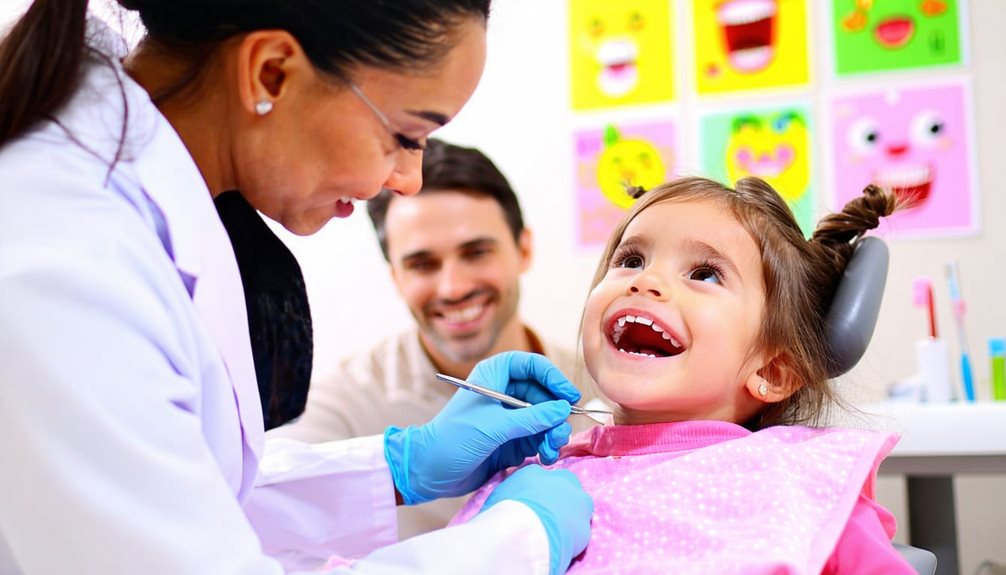
Affordable family dental care options include community dental clinics and government assistance programs such as Medicaid and CHIP, which provide essential dental benefits for low-income families. Dental savings plans are effective alternatives to traditional insurance, offering discounted rates and immediate benefits without waiting periods. Nonprofit organizations and dental schools offer markedly reduced rates, while state-specific assistance programs enhance access based on income and other factors. These options incorporate innovative solutions like tele-dentistry, minimizing geographical and financial barriers. For a thorough understanding of these solutions, exploring each option’s intricacies and how they align with your needs is essential.
Community Dental Clinics
Community dental clinics serve as an important resource for families seeking affordable dental care, especially in underserved areas where access to private dental practices may be limited.
These clinics play a significant role in community outreach, providing a range of dental services that prioritize preventive care. By focusing on preventive measures such as regular cleanings, fluoride treatments, and dental sealants, community dental clinics aim to reduce the incidence of oral diseases, thereby enhancing overall public health outcomes.
The innovative approach of community dental clinics often involves collaborations with local health organizations to extend their reach and impact. This synergy not only facilitates greater accessibility to dental services but also fosters an environment conducive to education and awareness.
Evidence-based practices are employed to guarantee that the care provided is both effective and efficient, aligning with the latest advancements in dental health research.
Moreover, community dental clinics frequently implement outreach programs that target vulnerable populations, including children and the elderly, to make certain no demographic is left underserved.
These initiatives are vital in mitigating the barriers to dental care access, ultimately contributing to healthier communities. By integrating preventive care strategies into their core services, community dental clinics exemplify a forward-thinking model for accessible, cost-effective dental care.
Dental Savings Plans
Dental savings plans are a strategic alternative for families seeking cost-effective oral healthcare solutions, offering membership benefits that considerably reduce out-of-pocket expenses.
These plans typically provide access to a wide network of participating dental providers, enabling members to receive discounted rates on a variety of dental procedures.
Evidence suggests that such plans can result in substantial savings, particularly for families with recurring dental needs.
Cost-effective Membership Benefits
A dental savings plan, often referred to as a discount dental plan, serves as a cost-effective alternative to traditional dental insurance, providing substantial savings on a wide range of dental services.
These plans are particularly advantageous due to their membership perks, which are designed to accommodate diverse financial situations, making them a budget-friendly option for families seeking extensive oral healthcare without the financial strain associated with conventional insurance premiums.
The primary mechanism for such savings lies in the plan’s structured fee schedule, which enables members to access discounted rates on services such as cleanings, X-rays, and even major procedures like crowns and root canals.
Unlike insurance, there are typically no annual spending limits, waiting periods, or pre-existing condition exclusions, allowing for immediate benefits upon enrollment. This flexibility is a significant advantage for families aiming to manage their dental care expenses effectively.
Furthermore, dental savings plans often incorporate innovative features such as telehealth consultations and preventive care incentives, aligning with current trends in patient-centered care.
Wide Network Access
Building on the benefits of cost-effective membership, another significant advantage of dental savings plans is their extensive network of participating providers. This wide network accessibility guarantees that families can access a plethora of dental care professionals, thereby enhancing the flexibility and convenience of selecting dental services.
With a broad spectrum of providers, dental savings plans cater to diverse geographic locations, facilitating access to affordable options for families across various regions. The strategic partnerships that dental savings plans establish with dental professionals are pivotal in offering network accessibility.
These alliances are crafted to align with the goal of affordability while maintaining quality care standards. By leveraging an expansive network, families are empowered to choose from numerous dental providers, guaranteeing that they receive personalized care that meets their unique needs without the financial strain often associated with dental procedures.
Furthermore, the integration of technological innovations within these networks enhances service delivery. Digital platforms enable seamless provider searches and appointment scheduling, optimizing the patient experience.
This embrace of technology fosters an environment where families can make informed decisions about their dental care options, guaranteeing that affordability and accessibility are harmoniously integrated into their healthcare journey.
Discounted Dental Procedures
Within the domain of dental savings plans, discounted dental procedures represent a cornerstone of cost-efficiency and accessibility. These plans, distinct from traditional insurance, provide enrollees with access to dental care services at reduced rates, fostering an environment conducive to preventative and corrective oral health measures.
By leveraging a network of participating dental providers, patients can benefit from significant reductions in the cost of various procedures, including affordable cleanings and discounted braces.
Evidence indicates that dental savings plans can result in savings ranging from 10% to 60% on routine and specialized services. This model is particularly advantageous for families seeking innovative solutions to manage oral health costs without sacrificing quality care. For instance, discounted braces, often a significant financial burden for families, become more accessible under these plans, reducing both initial and ongoing expenses.
Furthermore, the structure of dental savings plans emphasizes immediate activation, eliminating the waiting periods associated with traditional insurance. This feature guarantees timely access to affordable cleanings and other essential services, promoting consistent oral hygiene.
As the demand for cost-effective dental care solutions continues to grow, dental savings plans stand out as a viable, innovative option for families prioritizing both health and financial prudence.
Government Assistance Programs
Government assistance programs play a critical role in providing dental care access to families with limited financial resources.
Medicaid offers dental coverage for eligible individuals, while the Children’s Health Insurance Program (CHIP) extends dental benefits to children from low-income families, ensuring preventative and essential dental services.
Additionally, various state assistance programs supplement these federal initiatives, offering tailored support to meet the specific dental care needs of their respective populations.
Medicaid Dental Coverage
Medicaid dental coverage plays a critical role in providing essential oral health services to low-income families and individuals across the United States. As a government-funded program, Medicaid offers substantial dental benefits that vary by state, ensuring that essential preventive and restorative dental services are accessible to those who qualify.
Medicaid eligibility is determined by factors such as income level, household size, and specific state guidelines, making it imperative for potential beneficiaries to understand their state’s eligibility criteria.
Medicaid benefits encompass a range of dental services, including diagnostic, preventive, and restorative care. These services are designed to address the diverse oral health needs of the population, with a focus on early intervention and prevention.
For children, the Early and Periodic Screening, Diagnostic, and Treatment (EPSDT) benefit mandates thorough dental care, ensuring that pediatric oral health is prioritized. However, adult dental benefits under Medicaid can be limited, and states have discretion in determining the extent of coverage.
For innovative solutions, policymakers and healthcare providers are encouraged to explore advancements in tele-dentistry and community-based programs to enhance Medicaid’s reach and efficiency. Such efforts could lead to improved oral health outcomes and reduced disparities in dental care access among low-income populations.
CHIP Dental Benefits
Building upon the framework provided by Medicaid, the Children’s Health Insurance Program (CHIP) extends dental benefits to children in families with incomes too high to qualify for Medicaid but too low to afford private coverage.
CHIP coverage is essential in bridging the gap for families aiming for ideal oral health without financial strain. This initiative is a key component of public health policy, reflecting an understanding of the significant role dental care plays in overall health and development.
CHIP eligibility is determined by federal guidelines, although specifics may vary by state, allowing flexibility to address local demographics and economic conditions. Typically, eligibility encompasses families with incomes up to 200% of the federal poverty level, though some states extend this threshold.
Once eligibility is established, CHIP coverage provides a thorough suite of dental services. These services include routine check-ups, cleanings, fluoride treatments, fillings, and medically necessary orthodontic treatments, ensuring a strong preventative and corrective care framework.
For families seeking innovative, cost-effective healthcare solutions, CHIP represents a strategic blend of accessibility and quality. It empowers families by reducing financial barriers, thereby fostering a healthier generation equipped to thrive and innovate in a diverse global landscape.
State Assistance Programs
Maneuvering the landscape of state assistance programs requires an understanding of the diverse array of government initiatives designed to alleviate the financial burden of dental care for low-income families.
These programs are integral in providing access to essential oral health services, guaranteeing that economic constraints do not impede dental wellness. State funding plays a pivotal role in these initiatives, often directed towards Medicaid and state-specific programs, which cater to families with limited financial resources.
Eligibility criteria for state assistance programs are typically contingent upon income levels, family size, and sometimes immigration status.
State-funded programs often offer all-encompassing dental care, including preventive services, restorative treatments, and emergency care, thereby promoting a holistic approach to oral health.
Innovative approaches in state programs, such as tele-dentistry and mobile clinics, extend services to underserved areas, reducing geographic barriers. Such advancements guarantee that state assistance programs remain adaptive and responsive to the evolving needs of communities.
Dental Schools and Training Clinics
Exploring affordable dental care solutions often leads individuals to contemplate dental schools and training clinics as viable options. These institutions offer cost-effective services while providing student dentists with invaluable hands-on experience under the supervision of licensed professionals.
The dual benefit of reduced fees and quality care stems from the educational model wherein students, nearing the completion of their programs, perform dental procedures as part of their extensive training. This structure guarantees that services adhere to strict educational standards and regulatory guidelines.
Innovative approaches in dental schools often involve advanced diagnostic tools and treatment methodologies, making them a hub for cutting-edge dental care practices. The integration of modern technology in dental education provides student dentists with exposure to the latest techniques, guaranteeing that patients receive care that is both contemporary and effective.
Furthermore, these clinics frequently offer a wide range of services, from routine check-ups to complex procedures, tailored to meet diverse patient needs.
Research indicates that dental schools can reduce costs by approximately 20-50% compared to private practices, presenting a compelling case for individuals seeking affordable dental care. This model not only contributes to the professional development of future dentists but also facilitates community access to essential dental health services.
Dental Insurance Options
While dental schools and training clinics offer an economical avenue for dental care, another critical component of affordable oral health management is dental insurance options. Dental insurance provides a structured approach to managing dental expenses, but traversing the myriad of plans requires careful consideration.
Dental premium comparisons are essential for identifying cost-effective solutions. These comparisons involve evaluating monthly premiums, co-pays, deductibles, and maximum annual limits. By juxtaposing these elements, families can determine which plan aligns with their financial and dental care needs.
However, it is imperative to acknowledge the coverage limitations inherent in many dental insurance plans. Often, policies cover a percentage of preventive services such as cleanings and basic procedures like fillings, but major treatments such as crowns and orthodontic work may incur significant out-of-pocket expenses.
Furthermore, some plans impose waiting periods for certain procedures, limiting immediate access to necessary care.
Innovative insurance models are emerging, focusing on enhanced transparency and flexibility. For instance, dental savings plans offer a membership-based model with negotiated discounts on services, providing an alternative to traditional insurance.
As families explore these options, a meticulous analysis of dental premium comparisons and coverage limitations can empower informed decision-making, ensuring thorough and affordable oral care.
Nonprofit Dental Organizations
Nonprofit dental organizations play a crucial role in bridging the gap in access to oral healthcare for underserved populations. These entities leverage nonprofit initiatives to provide affordable, and often free, dental care to families lacking adequate insurance coverage. By focusing on community outreach, they guarantee thorough dental services are accessible, thereby addressing disparities in oral health outcomes.
Innovative models of care delivery are frequently employed, integrating preventive and restorative services tailored to the unique needs of the community. Evidence indicates that these organizations greatly improve oral health literacy and outcomes through targeted educational programs and preventive care initiatives.
By fostering partnerships with local health agencies, schools, and community groups, they enhance their reach and impact. The integration of mobile dental clinics and tele-dentistry platforms has further augmented their capacity to deliver care in remote or resource-limited settings, exemplifying innovation in service delivery.
Moreover, nonprofit dental organizations often engage in advocacy, influencing policy changes to promote systemic improvements in oral healthcare access. Their commitment to sustainable, scalable programs showcases the potential of nonprofit initiatives to transform community health landscapes, underscoring the importance of continued investment in and support for these essential services.
Frequently Asked Questions
How Can I Find a Reputable Dentist for My Family?
To identify a reputable family dentist, evaluate dental reviews on accredited platforms, ensuring adherence to clinical standards. Prioritize dentists with advanced technology integration, reflecting commitment to innovation in patient care, thereby fostering trust and long-term family dental health.
What Are the Typical Costs for Basic Dental Procedures?
The dental procedure costs for basic dental services, including cleanings, exams, and fillings, typically range from $75 to $300 per visit. However, geographical location and dentist expertise can influence these prices, necessitating thorough research for ideal care.
Are There Payment Plans Available for Dental Treatments?
Yes, many dental clinics offer payment assistance through tailored dental financing options. These innovative solutions often include installment plans, interest-free periods, and partnerships with third-party financiers, facilitating access to essential dental treatments for families.
How Can I Maintain Oral Health Between Dental Visits?
To maintain ideal oral health between dental visits, prioritize daily oral hygiene practices, including brushing and flossing, and incorporate healthy eating habits. Evidence suggests these strategies effectively reduce plaque accumulation and promote healthier teeth and gums.
Are There Specific Dental Care Options for Children?
Pediatric dentistry focuses on preventive care tailored for children. This includes regular check-ups, fluoride treatments, and dental sealants to protect against decay. Such evidence-based practices guarantee ideal oral health, fostering long-term benefits and minimizing future dental issues.
Conclusion
Affordable family dental care can be effectively accessed through various mechanisms. Community dental clinics provide reduced-cost services, while dental savings plans offer discounts on treatments. Government assistance programs extend coverage to eligible families, and dental schools present low-cost options through supervised student-provided care. Dental insurance plans can offer extensive coverage, and nonprofit dental organizations often deliver free or low-cost services. These options collectively enhance accessibility to essential dental care, thereby promoting oral health and well-being within communities.

