
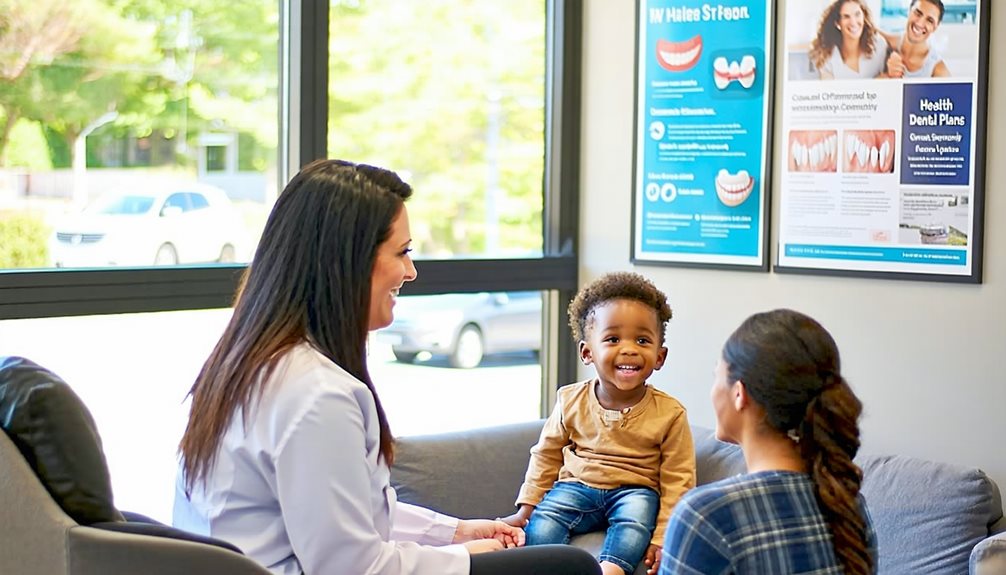
Accessing dental care cost-effectively can be achieved through several avenues. Community health clinics and nonprofit dental organizations offer reduced-cost services, often focusing on preventive care. Dental schools provide discounted treatments performed by supervised student dentists. Government assistance programs like Medicaid and CHIP offer dental benefits, particularly for low-income families. Additionally, discount dental plans and dental savings memberships can greatly lower dental costs by providing immediate access to reduced service rates. Volunteer dental clinics also play an essential role in offering free care to underserved populations. Exploring these options can uncover more opportunities for affordable dental services.
Community Health Clinics
Community health clinics serve as a significant resource for individuals seeking affordable dental care. These clinics provide a range of affordable treatments, making them an essential component of the healthcare safety net.
Often funded by government programs or charitable organizations, community health clinics are designed to offer dental services at reduced rates, ensuring that even those with limited financial resources can access necessary care. This model of care is particularly relevant in today’s healthcare landscape, where innovative solutions are needed to address disparities in access to dental services.
Preventive care is a cornerstone of the services offered at community health clinics. By emphasizing preventive measures, such as regular cleanings and check-ups, these clinics play an important role in reducing the incidence of more severe dental issues.
Early intervention not only improves individual health outcomes but also decreases long-term healthcare costs. This approach aligns with a growing trend towards proactive healthcare, where the focus is on maintaining health rather than merely treating diseases.
Dental Schools
Dental schools represent a valuable resource for individuals seeking cost-effective dental care. Engaging with dental schools allows patients to receive treatment from student dentists under the close supervision of experienced faculty members, ensuring a blend of innovation and quality care.
These institutions serve as a hub for dental education, where aspiring dentists refine their skills, merging theoretical knowledge with practical application.
Opting for care at a dental school can offer numerous benefits:
- Cost Efficiency: Treatments are often notably cheaper compared to private practices, making it accessible for those on a budget.
- Advanced Technology: Schools frequently use the latest dental technology, providing patients with innovative treatments.
- Comprehensive Care: A wide array of services is available, from routine cleanings to complex procedures, ensuring holistic oral health management.
- Contributing to Education: By participating, patients contribute to the educational growth of future dentists, playing a pivotal role in their practical learning journey.
In light of these advantages, dental schools stand as an excellent alternative for cost-effective dental care. They not only facilitate affordable access to necessary treatments but also support the advancement of dental education.
Embracing this option aligns with a forward-thinking approach to healthcare, fostering a mutually beneficial relationship between patient care and dental training.
Government Assistance Programs
Government assistance programs play an essential role in providing access to dental care for individuals who may otherwise struggle to afford it. These initiatives are designed to bridge the gap between high dental costs and the financial limitations faced by many individuals.
One prominent program is Medicaid, a government initiative offering financial assistance for dental services to eligible low-income individuals and families. Medicaid’s coverage varies by state, but it typically includes preventive, diagnostic, and restorative services for children, and in some states, for adults as well.
In addition to Medicaid, the Children’s Health Insurance Program (CHIP) extends dental benefits to children in families with incomes too high to qualify for Medicaid but too low to afford private insurance. These government programs guarantee that vulnerable populations receive essential dental care, promoting overall health and well-being.
Furthermore, federally qualified health centers (FQHCs) provide dental services on a sliding fee scale, making care accessible to those with limited financial resources. These centers receive government funding to deliver thorough healthcare services, including dental care, to underserved communities.
Discount Dental Plans
Discount dental plans offer an alternative solution for individuals seeking affordable dental care without the complexities of traditional insurance.
These plans utilize innovative discount strategies, providing members with immediate access to reduced rates for dental services. Unlike insurance, there is no waiting period, and the focus is on cost reduction rather than reimbursement. This approach simplifies the process, making dental care more accessible to a broader audience.
Key features of discount dental plans include:
-
Immediate Savings: Members receive discounts as soon as they join, eliminating the need to wait for coverage to begin.
-
Wide Network: These plans often boast extensive networks of participating dentists, allowing for greater choice and convenience.
-
Plan Comparisons: Consumers can easily compare different plans to select the one that best meets their needs and preferences.
-
No Annual Limits: Unlike some insurance policies, discount plans typically do not have annual caps on savings, providing continuous benefits throughout the year.
Dental Savings Memberships
Dental savings memberships offer an affordable alternative to traditional dental insurance by providing significant discounts on various dental services for a fixed annual fee.
These memberships typically include benefits such as reduced rates on preventive care, restorative procedures, and cosmetic treatments, making routine and necessary dental care more accessible.
Affordable Care Options
Steering through the complexities of dental care can be challenging, especially when cost is a significant concern. For individuals seeking innovative and affordable care options, Dental Savings Memberships provide a viable solution.
These memberships offer a structured pathway to maintain ideal oral hygiene while managing expenses. By focusing on preventive dental care, these plans help in reducing long-term costs associated with more extensive dental procedures.
Dental Savings Memberships provide access to a network of dentists offering reduced rates for various services. These memberships are distinct from traditional insurance, emphasizing affordability and accessibility.
Key features include:
- No Waiting Periods: Immediate access to discounted services without the delays often encountered with insurance plans.
- Reduced Fees: Substantial savings on routine preventive dental care like cleanings and exams, promoting consistent oral health maintenance.
- Broad Acceptance: A wide range of participating dentists and specialists, ensuring flexibility in choosing the right provider.
- Transparent Costs: Clear pricing structures, eliminating the uncertainty associated with unexpected dental bills.
Membership Benefits Explained
When considering the advantages of Dental Savings Memberships, it becomes clear that these plans are designed to maximize value for their members. These innovative programs provide an alternative to traditional dental insurance, offering significant membership perks that cater to individuals seeking cost-effective dental care.
Research indicates that these memberships can reduce dental costs by 10% to 60%, depending on the procedure and provider.
The simplicity of Dental Savings Memberships lies in their straightforward approach—members receive discounts at the point of service, eliminating the complexities of claims processing and waiting periods associated with insurance.
Furthermore, the membership perks extend beyond financial savings. Many plans include additional benefits such as free preventive care visits, which can encourage regular dental check-ups, ultimately promoting better oral health.
For individuals and families prioritizing both innovation and affordability in their healthcare choices, Dental Savings Memberships offer a strategic solution.
Nonprofit Dental Organizations
Nonprofit dental organizations play an essential role in providing affordable dental services to underserved populations through community health initiatives.
These organizations often operate volunteer dental clinics, where qualified professionals offer their time and expertise to deliver vital care at reduced or no cost.
Affordable Dental Services
Often, individuals seeking affordable dental care can benefit immensely from the services provided by nonprofit dental organizations. These organizations are vital in promoting preventive care and enhancing oral hygiene among underserved populations.
Typically, they work to reduce the financial barriers that often accompany dental treatments, ensuring access to essential services without compromising quality. By offering treatments at reduced rates or even for free, they enable individuals to maintain ideal oral health, which is essential for overall well-being.
Nonprofit dental organizations often provide a range of services, including:
- Preventive Care: Emphasis is placed on routine check-ups and cleanings to prevent serious dental issues.
- Restorative Procedures: They offer fillings, crowns, and other procedures necessary to restore dental health.
- Educational Programs: These organizations often conduct workshops to educate communities about oral hygiene practices.
- Specialized Treatments: Access to orthodontics and periodontics is sometimes available at reduced costs.
These organizations are instrumental in addressing the dental needs of those who might otherwise forego necessary treatments due to cost constraints.
The innovative models adopted by nonprofit dental organizations not only improve access but also contribute to the overall health of the communities they serve, reinforcing the importance of oral hygiene and preventive care.
Community Health Initiatives
Building upon the efforts of nonprofit dental organizations to provide affordable care, community health initiatives play a pivotal role in expanding access to dental services. These initiatives are designed to improve oral health outcomes through strategic public outreach and education campaigns. By leveraging partnerships with local governments, schools, and community groups, these initiatives aim to raise awareness about the importance of oral health and encourage preventive care practices.
Evidence suggests that community health initiatives can effectively reduce barriers to dental care. Through programs such as mobile dental clinics and school-based screenings, these initiatives offer innovative solutions that meet individuals where they are, especially in underserved areas. By focusing on preventive care, they not only address immediate dental needs but also contribute to long-term oral health improvements.
Public outreach is a cornerstone of these initiatives, employing innovative communication strategies to engage diverse communities. This includes leveraging digital platforms and social media to disseminate educational materials and resources.
Additionally, these initiatives often provide training for local health workers to guarantee sustainable impacts on community oral health.
Volunteer Dental Clinics
Volunteer dental clinics, spearheaded by numerous nonprofit dental organizations, provide essential services to communities lacking access to affordable oral healthcare. These clinics leverage the expertise of dental professionals who volunteer their time and skills to deliver free dental care to underserved populations. The impact of such volunteer services is profound, addressing the urgent needs of individuals who might otherwise forgo necessary dental treatment due to financial constraints.
Key benefits of volunteer dental clinics include:
-
Cost-Free Care: Patients receive essential dental services without incurring financial burdens, bridging the gap in access to oral healthcare.
-
Comprehensive Services: Ranging from routine check-ups to emergency procedures, these clinics cover a broad spectrum of dental needs.
-
Community Engagement: By involving local volunteers and organizations, these clinics foster a sense of community support and solidarity.
-
Educational Opportunities: Clinics often provide oral health education, empowering individuals with knowledge to maintain better dental hygiene.
These clinics represent an innovative approach to healthcare delivery, combining altruism and professional skill to meet community needs.
Frequently Asked Questions
How Can I Find Affordable Dental Care if I Live in a Rural Area?
To find affordable dental care in rural areas, consider exploring community health centers offering sliding-scale fees or mobile clinics providing services in underserved regions. These innovative solutions can enhance accessibility and affordability for rural residents seeking dental care.
Are There Any Online Platforms That Offer Discounts on Dental Services?
Online dental services and dental discount platforms provide innovative solutions for reducing dental care costs. These platforms often negotiate discounts with dental providers, enabling access to affordable treatments while maintaining quality, making them a valuable resource for cost-conscious patients.
What Are the Best Practices for Negotiating Dental Fees With Private Dentists?
Effective negotiation with private dentists involves requesting fee transparency, exploring available payment plans, and comparing market rates. Engaging in open dialogue about financial constraints can foster innovative solutions, ensuring mutually beneficial agreements while maintaining access to essential dental care.
Can Telehealth Services Be Used for Dental Consultations to Reduce Costs?
Utilizing telehealth benefits, virtual consultations for dental care can effectively lower costs by reducing travel expenses and increasing accessibility. Evidence suggests these services offer preliminary assessments, triaging, and follow-up care, fostering innovation in dental healthcare delivery.
How Can Dental Tourism Offer Cost-Effective Options for Dental Procedures?
Dental tourism leverages international dental destinations to offer patients substantial procedure savings. This innovative approach capitalizes on lower costs in certain countries, enabling access to high-quality care, while simultaneously reducing overall expenditure associated with extensive dental procedures.
Conclusion
Accessing dental care in a cost-effective manner is feasible through various avenues. Community health clinics offer services at reduced rates, while dental schools provide care under the supervision of experienced professionals. Government assistance programs can alleviate financial burdens for eligible individuals. Discount dental plans and dental savings memberships present affordable alternatives to traditional insurance. Additionally, nonprofit dental organizations play an essential role in delivering services to underserved communities. Collectively, these options enhance accessibility and affordability of dental care.

